Since 2009
Enterprise software delivery — a track record built across technology cycles, not just the current AI wave.



VOCSO is an AI agent development company that builds custom agents which plan tasks, use your systems and hand off to people at defined approval points, for mid-size firms and enterprises. A fixed-price pilot costs $12K–$20K over about 6 weeks; a production agent typically takes 8–16 weeks. ISO 27001 certified, building software since 2009.


 Reviewed by Deepak Chauhan, Founder & CEOLast updated
Building production software since 2009

Find the workflows where an agent pays back, check data and system access, and get a costed agent roadmap before any build.
Single or multi-agent systems purpose-built for your workflow — proposal generation, knowledge retrieval, compliance checks, resource scheduling, and more.

Connect agents to your existing systems: Salesforce, HubSpot, SharePoint, ServiceNow, ERPs, and document repos — via secure API connectors or MCP.

Agents that search your proposals, contracts and project archives with hybrid vector and keyword retrieval, and cite their sources.

Production observability: latency tracking, hallucination detection, cost monitoring, action audit trails, and human-in-the-loop escalation gates.

Embedded AI copilots inside your existing tools — Outlook, Teams, SharePoint, CRM — so users get agent-powered assistance without leaving their workflow.

A fixed-scope, fixed-price pilot ($12K–$20K, about 6 weeks) on one workflow and your real data, with success criteria agreed upfront.

Orchestrate teams of specialized agents using LangGraph, CrewAI, or AutoGen. Each agent has its own role, tool set, and defined authority scope.

Replace brittle rule-based workflows with adaptive agents that plan, act, and self-correct — even when inputs or process conditions change mid-execution.

Give agents access to legacy systems without a full migration, through MCP (Model Context Protocol) servers or structured API wrappers.

Agents that autonomously gather, synthesize, and cite from internal archives and external sources — for due diligence, competitive intelligence, and bid research.
Our AI agents are tailored to the specific workflows, data environments, and governance requirements of each industry.
Consulting & Advisory Knowledge retrieval, proposal drafting support, conversational BI and resource-planning agents for consulting and engineering firms.
Case study: conversational BI platform
 Plain-English questions turned into validated SQLBusiness rules enforced before any query runsAnswers returned as chart, narrative and Excel export
SaaS & Digital Platforms. Build intelligent product experiences with AI copilots, automated onboarding workflows, and analytics agents inside your platform.
In-product AI copilot developmentAutomated user onboarding agentsUsage analytics and churn-prediction agentsEngineering & Infrastructure. Use AI agents for project knowledge retrieval, site inspection intelligence, predictive maintenance, and compliance monitoring.
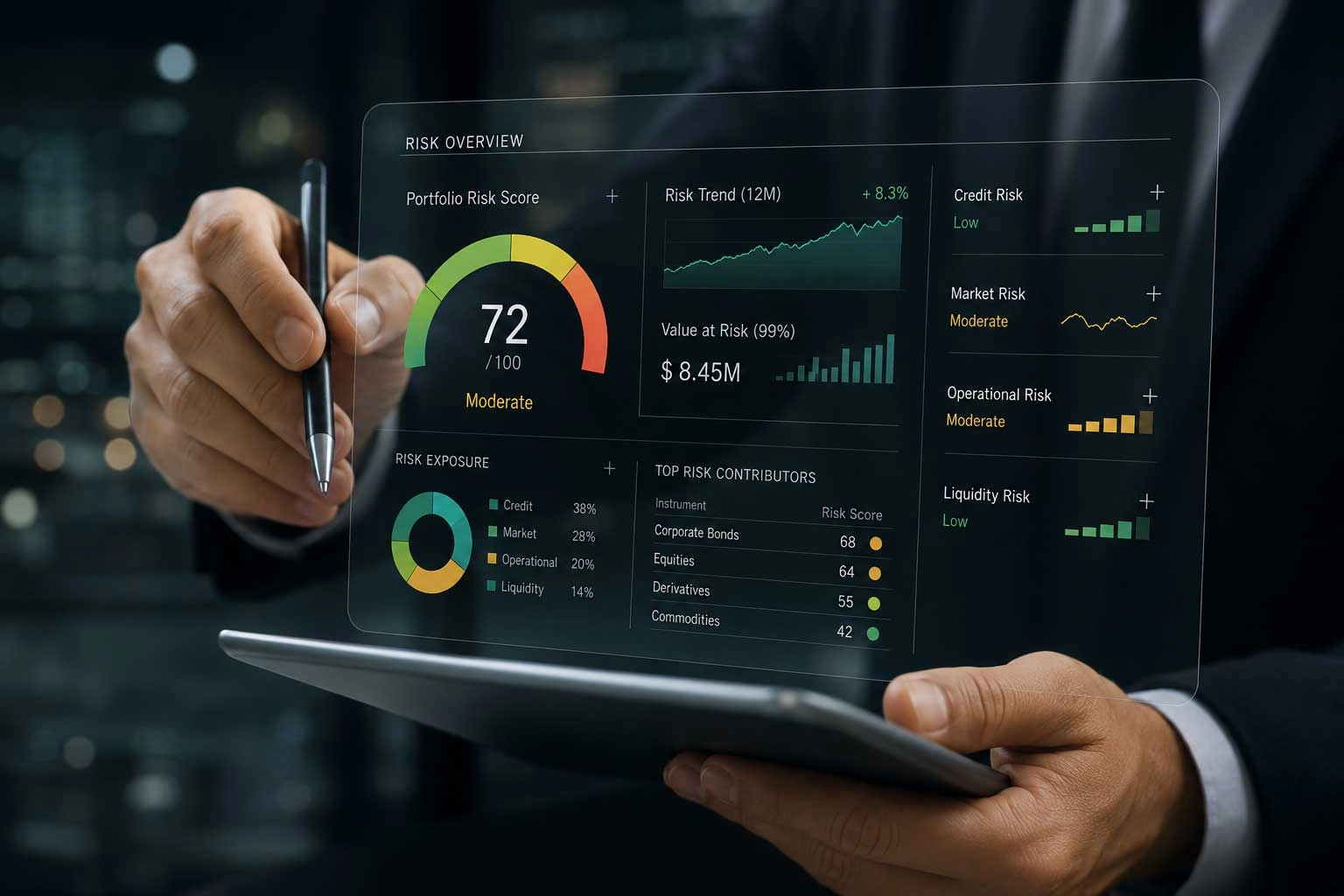
Project document retrieval agentsInspection and anomaly detection agentsCompliance reporting automationFinancial Services. Automate document review, compliance checks, KYC workflows, risk scoring, and client reporting with governed AI agents.
Contract review and clause extraction agentsAML / KYC document agentsRegulatory compliance monitoring agentsSupply Chain & Logistics. Improve vendor communication, demand forecasting, shipment tracking, and inventory intelligence with autonomous agents.
Vendor onboarding and communication agentsInventory anomaly detection agentsDemand forecasting and reorder agentsHealthcare & Research. Enable medical document intelligence, research summarization, patient support workflows, appointment automation, knowledge assistants, and secure data analysis.
CleanTech & Mobility. Support sustainability operations, fleet intelligence, energy monitoring, and compliance workflows with AI agents.
Fleet optimization and route planning agentsEnergy usage monitoring and reporting agentsSustainability compliance and ESG reporting agentsEdTech Platforms. Improve learner support, content operations, student onboarding, and course personalization with AI agents.
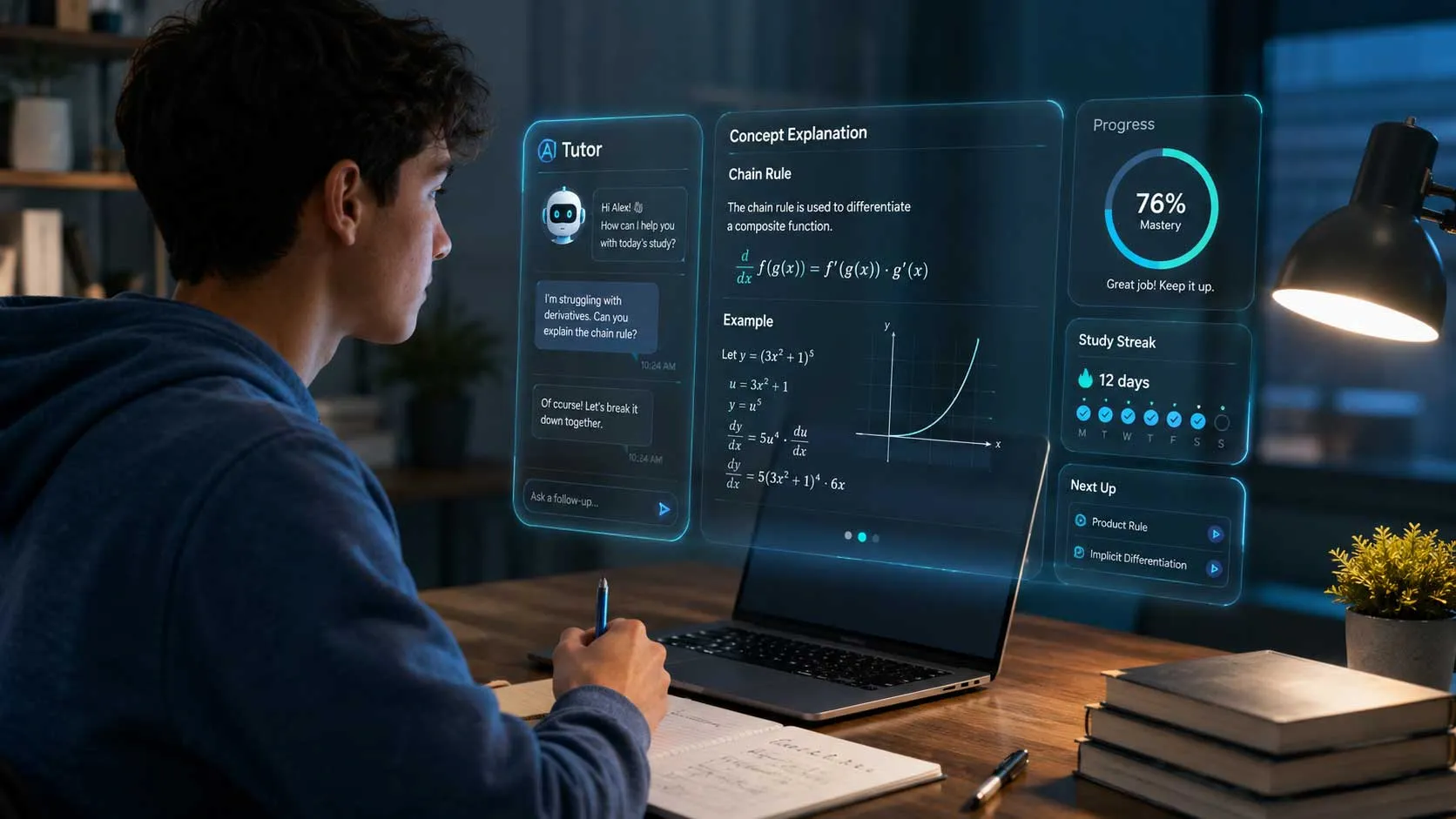
AI tutor and student support agentsCourse recommendation and learning path agentsContent generation and assessment automationNon-Profits & Foundations Automate grant research, donor communication, impact reporting, and program coordination with AI agents.
Grant discovery and proposal drafting agentsDonor engagement and communication agentsImpact measurement and reporting automation





We combine deep AI expertise with enterprise delivery practices to ship production-ready intelligent systems.
Enterprise software delivery — a track record built across technology cycles, not just the current AI wave.

Independently certified, annually audited — meets the security baseline enterprise procurement actually checks.

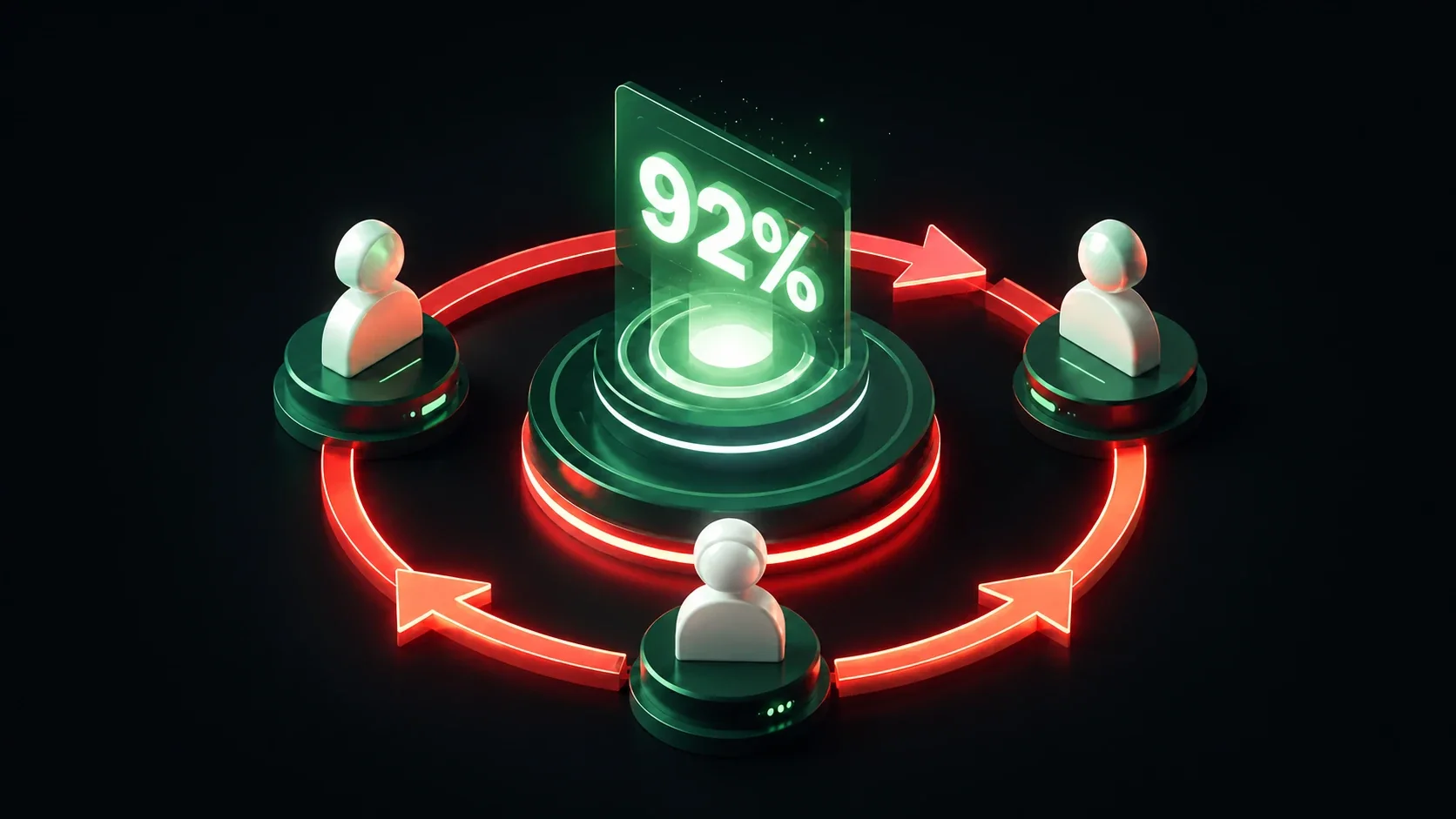
92% of clients come back for follow-on work, which is the clearest measure of delivery quality we know.

Verified client reviews, independently collected — real feedback from real enterprise engagements.

Certified quality management: documented reviews, test gates and handover on every engagement.

DataSense, DocSense, BidSense — proprietary pre-built AI products that go live in weeks, not months of custom build.

IP, data, and strategy protected before the first discovery call ends — not after contracts are signed.

Post-deployment optimisation included in every engagement — we stay accountable until the system is performing.
 AI Agent Development: What Buyers Should Know
Direct answers to the questions we hear most from teams evaluating an AI agent development company: what an agent is, where it pays off, how to judge a vendor, whether you are ready, and what it costs.
AI agent development is the engineering of software that is given a goal, plans the steps to reach it, calls tools and business systems to carry those steps out, and checks its own results. Unlike a chatbot, which only answers, an agent acts: it can read an RFP, search past proposals, query a CRM and draft a response for review. At VOCSO, custom AI agent development starts with an agent design document that fixes the agent's authority scope (what it may do, what it must escalate, what it must refuse), its tools, its memory and its success metric. We then build on an orchestration framework such as LangGraph or CrewAI, connect systems through APIs or MCP servers, and enforce permissions in the orchestration layer rather than the prompt. No agent reaches production without an evaluation suite, an action-level audit trail and human approval for high-impact steps.
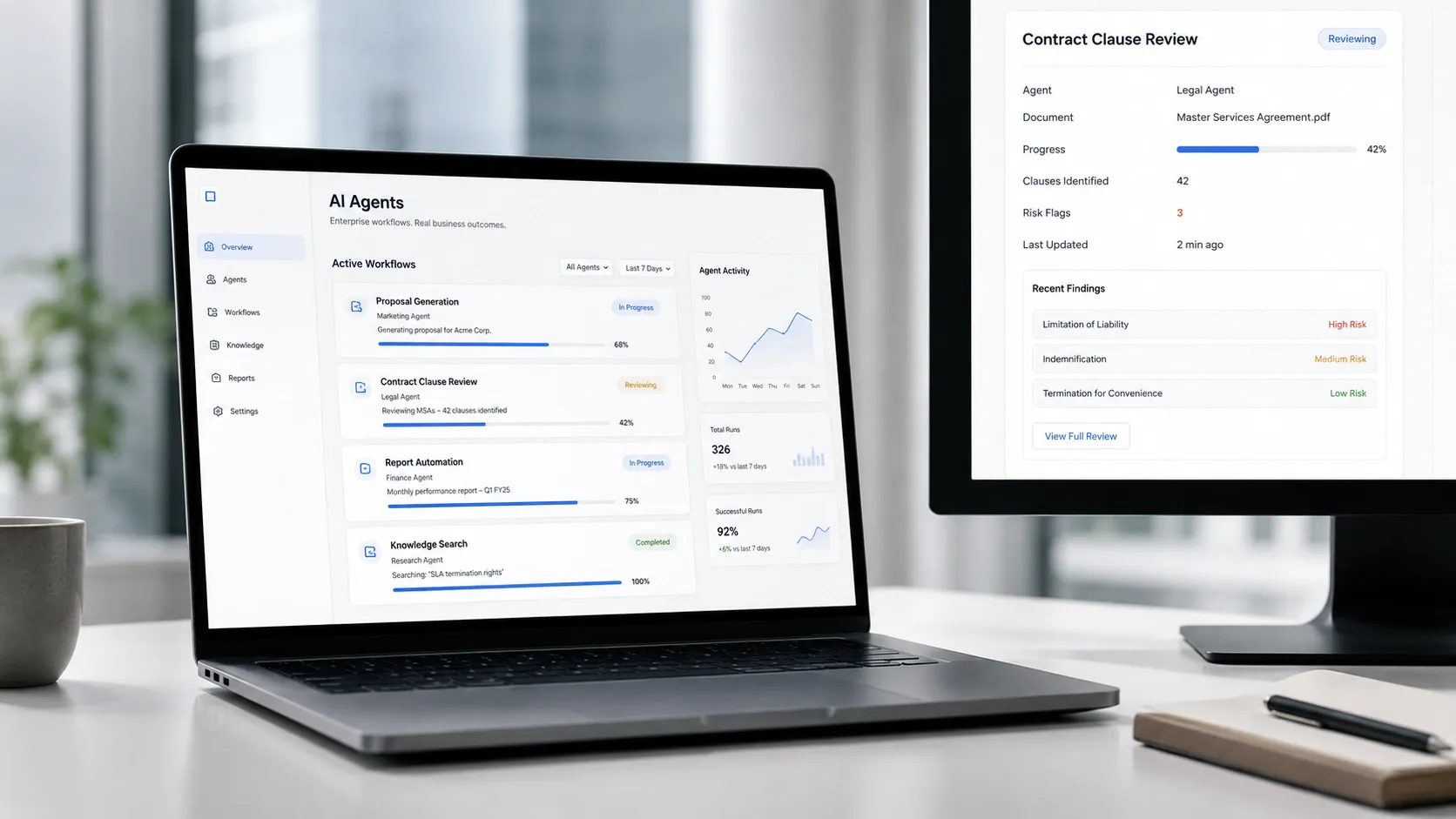
The most common production agents are practical, not experimental: proposal and bid agents that turn an RFP into a first draft from past wins; contract review agents that flag non-standard clauses; reporting agents that assemble weekly client updates from project data; and knowledge agents that answer "what did we do for a similar client?" from the archive. Each one keeps a person in the loop for anything that leaves the building.
Failed agent projects tend to share three problems: no reliable data layer, so outputs were wrong; no governance design, so agents acted outside their intended scope; and no production architecture, so what worked in the demo broke at scale. Teams that succeed now build data-first, with governance and monitoring designed in from day one.
An AI agent decides its own next step within a defined scope. Agentic workflow automation runs a fixed sequence (for example, in n8n) where an LLM handles individual steps such as classifying or summarising. If the path is predictable, a workflow is cheaper and easier to govern; if the path depends on what the agent finds, you need an agent. See agentic workflow automation services for the workflow side.
Key Takeaway: An agent is only as good as its tools, data and limits. Most of the engineering effort goes into integrations, guardrails and evaluation, not the prompt.
AI agents pay off on high-volume, multi-step knowledge work that follows a pattern but needs reading and judgement: research synthesis, first drafts, document review, triage and reporting. They free experienced people from retrieval and assembly so they can spend their time on decisions and client work.
When growth depends on hiring, margins and quality both come under pressure. Agents take over the repeatable parts of delivery, such as gathering data, summarising sources and producing first drafts, so the same team can handle more work without lowering the bar.
Quality often depends on who is on the project. An agent that checks work against your methodology, templates and past deliverables acts like a reviewer embedded in every workstream, catching gaps before a senior person has to.
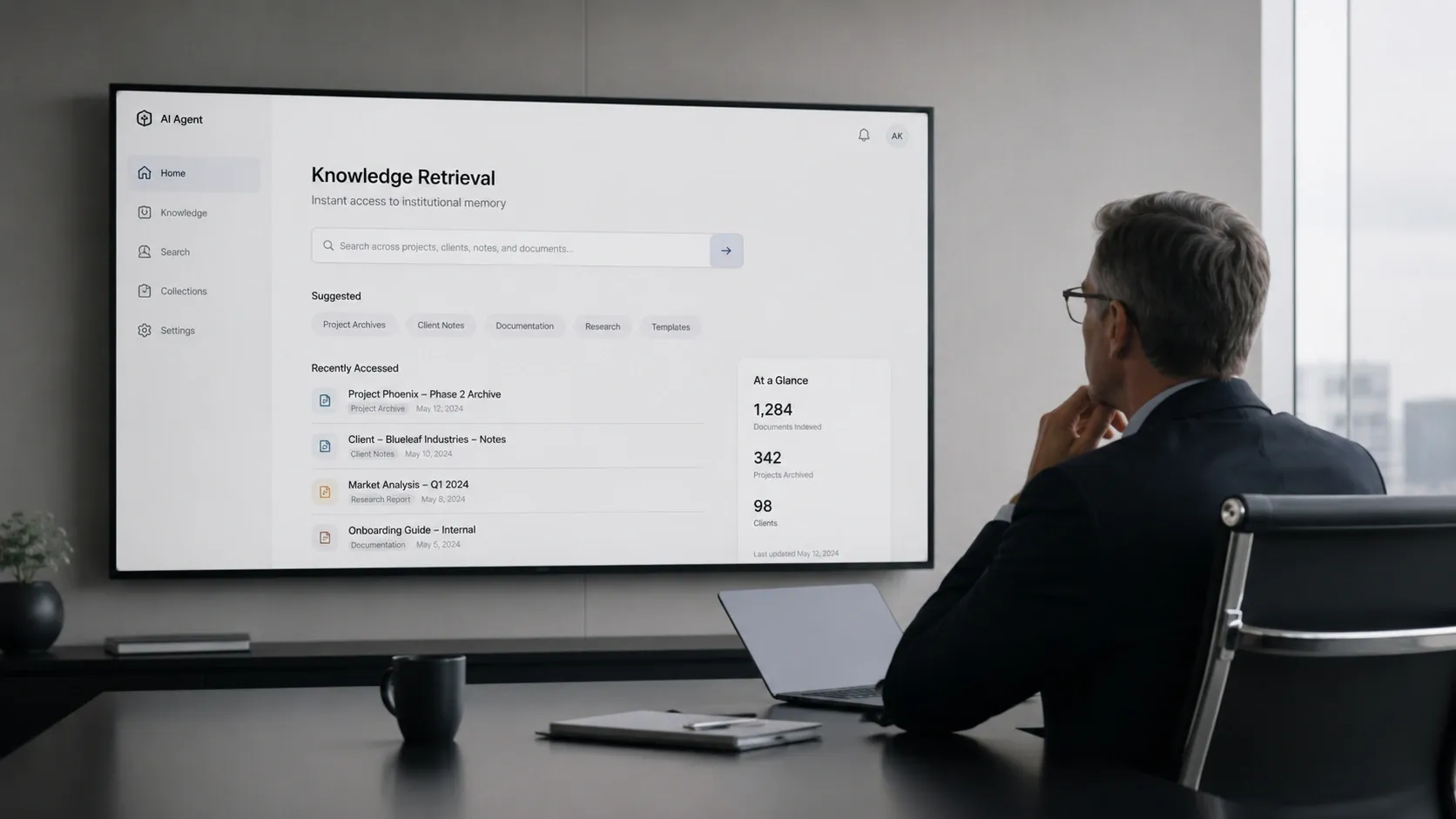
Every departure takes project context and client history with it. A knowledge agent indexed on your archive, notes and internal documentation keeps that context searchable, with citations back to the source.
Newer firms are pricing work on partially agent-assisted delivery, and procurement teams compare those proposals against established firms. Agents let you match their speed while keeping the expertise clients pay for.
Pro Tip: Pick a first workflow that is painful, frequent and easy to measure. A clear before-and-after metric is what earns budget for the second agent.
Choose a partner that starts with your data, systems and edge cases rather than a demo, recommends simpler tools when they fit, runs agents after launch, and defines success in business terms. Ask each vendor to show a deployment where a legacy integration broke and how they fixed it.

A template vendor shows you an agent demoed a hundred times on clean data with predictable inputs. Ask them what happens when it encounters your CRM schema, your legacy document formats, or a workflow that doesn't fit their standard pattern. A serious partner starts with your data, your systems, your edge cases — before designing anything. They will tell you when your infrastructure isn't ready. Template vendors won't. Question to ask any vendor: 'Show me a deployment where you had to build a custom integration for a legacy system. What broke, and how did you handle it?'
A vendor with a preferred tech stack will recommend that stack regardless of your situation. A strategy-first partner tells you when LangGraph is the right choice and when it isn't — when a simpler rule-based system outperforms an LLM agent for a specific use case, and when RAG adds cost without value. Red flag: any vendor who proposes a full multi-agent system in the first meeting without asking about your data maturity.
An agent shipped and forgotten drifts. Models change, business rules change and regulations change. An agent that meets its accuracy target at launch can fall well below it within months if nobody monitors it. Ask every potential partner what their LLMOps practice looks like, how they detect drift and how often they re-evaluate. Silence or vagueness is an answer.
The right partner defines success in terms a board understands, such as cost per proposal, research hours per engagement or turnaround time, and agrees the baseline before the build. Latency and retrieval accuracy matter too, but they are the means, not the result. Ask every vendor what the business metric for success is on day 90.
Red flag: A vendor who proposes a full multi-agent system in the first meeting without asking about your data maturity or approval rules.
You are ready for a first agent if the data it needs is accessible, one team owns the workflow and wants the change, and you can name the outcome to measure. Gaps in any of these do not stop a pilot, but they decide where it should start and how narrow it should be.

In our experience, most failed agent projects trace back to data, not technology. Four questions to answer honestly: Is the data the agent relies on reachable through an API or a structured format, or locked in PDFs, email threads and shared drives? Is there a single source of truth? How current is it? Who owns data governance? If the answer to the last question is "nobody, really", the first investment is not the agent.
Draw the map before you build the agent. For a typical consulting engagement, a workflow touches: CRM for client data, project management for timelines, document management for deliverables, email for communications, and finance for billing. Each integration point is a potential failure mode. The firms that ship agents fastest are the ones who complete this mapping in week one, not week eight.
Every enterprise agent needs three governance elements before production: a defined authority scope (what it can do, what it must escalate, what it refuses); a human-in-the-loop checkpoint for decisions above a defined consequence threshold; and an audit trail. Build these before you build the agent. It takes two weeks, not two months, and it prevents the kind of incident that sets a programme back by a year.
A readiness gap is a reason to scope carefully, not to wait. The right starting point is a pilot on one workflow with clean data, one team with clear buy-in and one outcome defined in advance. A 6-week pilot that proves a measurable saving is what unlocks budget and internal support for everything that follows.
Pro Tip: A short AI consulting discovery maps data, integrations and governance gaps in about two weeks, so the pilot scope is realistic.
A fixed-price agent pilot costs $12K–$20K and takes about 6 weeks. A single production agent integrated with your systems typically costs $20K–$60K over 8–16 weeks, and a multi-agent system with deep integration and full governance runs $60K–$150K+ over 3–6 months. The number of tools and systems the agent touches drives most of the cost.

| Scope | Typical investment | Timeline |
|---|---|---|
| Agent pilot on one workflow, real data, one live system | $12K–$20K, fixed price | About 6 weeks |
| Single production agent with integrations, evaluation and audit trail | $20K–$60K | 8–16 weeks |
| Multi-agent system with several systems, RAG layer and full governance | $60K–$150K+ | 3–6 months |
| Running costs: model calls, hosting, monitoring, re-evaluation | About 15–25% of build cost per year | Ongoing |
Key Takeaway: Read the AI development cost guide for how each driver affects the budget, and compare market figures on the AI development cost statistics page.
Not every process needs an agent. Here is how we decide what to build, and when a simpler chatbot, an RPA bot or an enterprise AI chatbot is the better investment.
| Chatbot | RPA bot | AI agent | |
|---|---|---|---|
| What it does | Answers questions in a conversation | Repeats a fixed sequence of clicks and keystrokes | Plans the steps toward a goal, uses tools and systems, and checks its own results |
| Handles change | Only within its script or knowledge base | Breaks when a screen or field changes | Adapts when inputs, documents or conditions differ from last time |
| Takes action | Rarely, beyond hand-off to a human | Yes, but only the exact steps it was recorded with | Yes, through APIs and MCP connectors, within a defined authority scope |
| Best for | FAQs, first-line support, internal help desks | High-volume, stable, rules-based data entry | Multi-step knowledge work: bid research, document review, triage, reporting |
| Governance needed | Content review | Change management when systems update | Guardrails, audit trails, evaluation and human-approval gates |
Weeks 1–2
We define the right agent use cases, workflows, data access, and control boundaries before development begins.
Stakeholder interviews & workflow mappingData source audit & access assessmentAgent authority scope definitionHuman handoff condition mappingAgent design document sign-offWeeks 3–5
We build the core agent architecture, including model selection, tool connectors, memory, and orchestration logic.
LLM selection & benchmark testingTool connector architectureMemory layer design (short + long term)Orchestration framework setupSandbox prototype for stakeholder reviewWeeks 5–8
We connect the agent with your business systems, knowledge sources, APIs, and secure enterprise data flows.
Live system API integration (CRM, ERP, docs)RAG layer configuration (if required)Data security & access reviewMCP / connector development for legacy systemsIntegration test suiteWeeks 8–9
We implement monitoring, audit trails, escalation controls, and safety rules to keep agent behavior reliable and compliant.
Action audit trail implementationHallucination guardrail setupHuman-in-the-loop escalation gatesCost & latency monitoring dashboardZero Trust access controls reviewWeeks 9–12
We launch a controlled pilot, gather real-user feedback, refine the system, and move it into production with support.
Controlled pilot with real usersStructured feedback & iterationProduction deploymentFull runbook & documentation90-day post-launch support (included)Book a free 30-minute discovery call with a senior AI engineer — no slide deck, just questions about your workflows, your data, and your goals.






The agent interprets a plain-English business question, applies predefined business rules, generates SQL, validates it before execution against enterprise databases, and returns a chart, a written insight and an Excel export.
See case study
 739
 SQL Server
 4 chart types
 Validated SQL
This work became DataSense, our conversational BI product. We build custom versions through conversational BI services, or browse all our AI projects.
We stay at the cutting edge of agentic AI, using capable models, orchestration frameworks, vector databases, and deployment infrastructure — selecting the right combination for your architecture, use case, and security requirements.
State-of-the-art models for reasoning, generation, and tool use.
 OpenAI GPT
 Claude
 Google Gemini
 Cohere
 Mistral
Coordinate agents, tools, and workflows with reliability and control.
 LangChain
 LangGraph
 AutoGen
 CrewAI
High-performance vector databases for semantic search and retrieval.
 Pinecone
 Weaviate
 Milvus
 Qdrant
 Chroma
Store, recall, and manage agent memory and long-term state.
 Redis
 PostgreSQL
 Zep
 LangMem
Modern languages and runtimes for building AI applications.
 Python
 TypeScript
 Node.js
 FastAPI
Connect to tools, APIs, and external systems seamlessly.
 MCP
 REST APIs
 GraphQL
 n8n
 Zapier
 Webhooks
Monitor, trace, and evaluate AI systems in production.
LangSmith Langfuse
 OpenTelemetry
 Grafana
 Prometheus
Enterprise-grade cloud services and infrastructure foundations.
 AWS Bedrock
 Azure OpenAI
 GCP Vertex AI
 Docker
 Kubernetes
VOCSO itself is certified to ISO/IEC 27001 and ISO 9001:2015. For the other frameworks below, we map your obligations to concrete agent controls (access scopes, audit trails, approval gates) during discovery.

General Data Protection Regulation

Information Security Management Systems
System and Organization Controls

For AI applications in healthcare
Responsible AI principles and implementation
AI Risk Management

Principles and implementations
India’s personal data protection framework

Auditability frameworks

Standards and evaluation practices
Ranges from our delivered projects. Agent cost depends mostly on how many systems the agent touches and how much autonomy it has, so every engagement starts with a free discovery call. Minimum engagement is $10K.
Validate feasibility on your real data and get a costed plan for the full build before you commit.
One production-ready capability, such as a RAG assistant, an AI agent or a forecasting model, deployed and integrated.
Data pipelines, MLOps, evaluation and monitoring: a system that holds up in production, not a notebook demo.
 Fixed-Price POC
Validate an AI agent use case with a low-risk, fixed-scope engagement designed to prove value, feasibility, and ROI before committing to a full build.
4–6 week delivery timeline Defined scope & success criteria Low commitment, fixed budget Executive-ready ROI assessment Dedicated AI Team
A cross-functional AI agent team embedded into your environment — working within your processes, security requirements, and communication tools.
AI, Data & MLOps specialists Named delivery lead Works within your NDA & security policies Scalable team composition Project-Based
End-to-end delivery of a defined AI agent capability with fixed scope, timeline, and commercial terms. Full knowledge transfer and documentation included.
Fixed scope & pricing Defined milestones & deliverables Dedicated project management Knowledge transfer & documentationNot sure which engagement model fits your agent project?
Book a call
Feedback from clients across our software and AI engagements.
View all client testimonials“Vocso team has really creative folks and is very co-operative to implement client project expectations. MicroSave Consulting had great experience working with Anju and Prem.”

“Working with Deepak and his team at Vocso is always a pleasure. They employ talented staff and deliver professional quality work every time.”

“We love how our website turned out! Thank you so much VOCSO Digital Agency for all your hard work and dedication.”

“Vocso team has really creative folks and is very co-operative to implement client project expectations. MicroSave Consulting had great experience working with Anju and Prem.”
“Working with Deepak and his team at Vocso is always a pleasure. They employ talented staff and deliver professional quality work every time.”
“We love how our website turned out! Thank you so much VOCSO Digital Agency for all your hard work and dedication.”
Most agent demos fail in production because they treat memory as an afterthought — and the agent forgets everything the moment a session ends.
An AI agent without properly designed memory is not an agent — it's a stateless chatbot with extra steps. Memory is what makes agents capable of handling multi-turn, multi-session, multi-user workflows in enterprise environments.
Short-term memory — In-context working memory for the current session — managed via the orchestration framework's state object, not the LLM's context window alone.
Long-term memory — Persistent storage (PostgreSQL + vector index) for cross-session recall — project context, user preferences, prior decisions, and past outputs.
Episodic memory — A log of what the agent did, in what order, and with what outcomes — essential for audit trails and human review of agent decisions.
Forgetting strategy — Memory must have a defined eviction policy — not everything should persist indefinitely. We design TTL and relevance-based pruning into every memory layer.
At VOCSO, memory architecture is designed in the Discovery phase — because getting it wrong means rebuilding the agent, not tweaking a prompt.
An agent that can call tools unreliably is more dangerous than no agent at all — it creates invisible errors that compound across multi-step workflows.
Tool use is where most enterprise AI agents break down in production. Every tool call is a potential failure point: bad parameters, timeout, unexpected response format, permission denied. The agent needs to handle all of these gracefully — not crash, not silently hallucinate a response.
Tool schema validation — Every tool call is validated against a strict schema before execution — the agent cannot pass malformed parameters to a live system.
Retry logic with backoff — Transient failures (API timeouts, rate limits) are handled with exponential backoff and a maximum retry count — not infinite loops.
Error state handling — When a tool fails, the agent logs the failure state with full context, stops the affected workflow branch, and creates a human handoff task.
Audit logging — Every tool invocation — parameters, response, latency, outcome — is logged to a persistent audit trail. Required for compliance-sensitive workflows.
VOCSO tests every tool connector against real failure scenarios before promotion to production — API down, malformed response, rate limit, permission denied, and partial response.
The coordination pattern you choose determines whether your multi-agent system is debuggable — or a black box that fails silently under load.
Multi-agent systems introduce a coordination problem that doesn't exist in single-agent designs. Who decides which agent runs next? How do agents share state? What happens when two agents conflict? Getting this wrong produces systems that are impressive in demos and unreliable in production.
Supervisor pattern — A central supervisor agent orchestrates specialist agents, assigns tasks, resolves conflicts, and enforces completion criteria. Best for workflows with clear sequencing.
Peer-to-peer pattern — Agents communicate directly, passing messages and results between themselves. Best for parallel workloads where agents operate independently.
Human-in-the-loop gate — Either pattern benefits from a defined set of conditions under which the orchestrator pauses and requests human input before continuing.
State management — Shared state is the hardest engineering problem in multi-agent systems. We use LangGraph's typed state graph to make state transitions explicit and testable.
At VOCSO, the coordination pattern is defined at the agent design phase and documented in the agent design spec — not figured out during debugging.
Shipping an agent to production without a defined evaluation framework is not a risk you take — it's a mistake you make.
A language model that sounds confident is not necessarily correct. An agent that completes a task in a demo is not necessarily reliable under the edge cases, adversarial inputs, and system failures that production environments generate every day. Evaluation is how you find those gaps before your users do.
Task completion rate — Does the agent complete the target workflow end-to-end, without errors, on a representative sample of real inputs? Measured against a labelled test set.
Tool call accuracy — Are tool calls made with correct parameters? Are malformed calls caught before execution? Measured per tool, per workflow step.
Retrieval quality (for RAG agents) — Is the retrieved context relevant? Are citations accurate? Measured using precision@k and MRR against a test query set.
Failure mode coverage — Has the agent been tested against all defined failure scenarios — bad input, tool unavailable, ambiguous instruction, missing data? Each failure mode has a pass/fail criterion.
No VOCSO agent ships to production without passing its evaluation benchmark. For retrieval-heavy agents, see how we benchmark retrieval on our RAG development services page.
An AI agent without governance isn't an enterprise tool — it's a liability.
Governance for AI agents is not a compliance checkbox. It is the engineering discipline that determines what the agent is allowed to do autonomously, what requires human approval, and what can never happen at all — and it needs to be enforced at the orchestration layer, not just described in the system prompt.
Authority scope definition — Every agent has a precisely defined set of permitted actions. Write permissions, API scopes, and data access are granted by action — not by session.
Mandatory escalation conditions — Specific conditions — output uncertainty above threshold, high-stakes action, ambiguous instruction — trigger a mandatory human review gate before execution continues.
Audit trail — Every agent action — tool call, decision, escalation, output — is logged to an immutable audit trail with timestamps, parameters, and outcomes. Required for regulated industries.
Prompt injection defences — We test every agent against prompt injection — user inputs designed to override the agent's instructions. Defence is at the orchestration layer, not just prompt wording.
VOCSO governance design is independent of the LLM, so it cannot be overridden by a crafted user message. For organisation-wide governance and security review, see enterprise AI development.
You delivered exactly what you said you would in exactly the budget and in exactly the timeline.





 Transparency on every decision Talented Team of AI Engineers Smooth Collaboration & Reporting Efficient & Adaptive Workflow Strict Privacy Assurance with NDA 12 Months Free Post-Launch Support On-time Delivery, No Surprises ISO 27001 Certified Engineering
Most teams start with one high-value workflow, such as proposal drafting, knowledge retrieval or compliance checks. We help you scope, design and prove it in about 6 weeks at a fixed price. No open-ended contracts.
deepak@vocso.com — no forms, no funnels.
AI agent development services cover designing, building and running agents that complete multi-step tasks using your tools and data. At VOCSO that includes use-case selection, an agent design document (authority scope, tools, memory, escalation rules), orchestration on LangGraph, CrewAI or AutoGen, connectors to your systems through APIs or MCP, a RAG layer where the agent needs your documents, an evaluation suite, guardrails, an action-level audit trail and production monitoring. Common builds are knowledge retrieval agents, proposal and bid agents, document review agents, reporting agents and multi-agent systems that coordinate several of these. See our AI development services hub for related work.
A fixed-price agent pilot costs $12K–$20K and takes about 6 weeks. A single production agent with integrations, evaluation and an audit trail typically costs $20K–$60K, and a multi-agent system with several integrations, a RAG layer and full governance runs $60K–$150K+. Our minimum engagement is $10K. The main cost driver is the number of systems the agent reads from or writes to, followed by how much it may do without human approval. Plan for about 15–25% of the build cost per year to run and maintain it. The AI development cost guide explains each driver.
A production AI agent typically takes 8–16 weeks: about 2 weeks for discovery and agent design, 3–6 weeks for the core build and integrations, 1–2 weeks for governance hardening, then a controlled pilot before full rollout. A scoped proof of concept takes about 6 weeks. The largest variable is system access. If your CRM and document repositories have documented APIs, integration is fast; legacy systems without APIs need wrappers or MCP servers, which adds time. Multi-agent systems usually take 3–6 months because each agent and hand-off needs its own evaluation.
Enterprise AI agent development adds the controls a security and compliance team needs before an agent can touch production systems. We use identity-first access through your identity provider, least-privilege permissions granted per action, no standing credentials in the agent runtime, and an immutable audit trail of every tool call and decision. High-impact actions, such as sending client emails or updating contracts, always require human approval, and these rules are enforced in the orchestration layer rather than the prompt. Our delivery is ISO 27001 certified. Read more on our enterprise AI development page.
A chatbot answers questions, an RPA bot repeats a fixed sequence of clicks, and an AI agent plans steps toward a goal and uses tools to carry them out. Chatbots suit FAQs and first-line support; RPA suits stable, high-volume data entry but breaks when screens change; agents suit multi-step knowledge work such as research, document review and triage, where inputs vary each time. Agents also need the most governance: guardrails, audit trails and approval gates. If your process is predictable, agentic workflow automation or an AI chatbot may be the cheaper choice.
We are framework-agnostic and choose per workflow, but LangGraph is our default for enterprise agents. It makes state, transitions and human-in-the-loop gates explicit and testable, which matters when an agent touches client data or production systems. CrewAI suits role-based multi-agent setups where agents with defined personas collaborate on research or document synthesis. AutoGen fits dynamic, conversational multi-agent patterns. For models we benchmark OpenAI GPT, Anthropic Claude, Google Gemini and open-weight models such as Llama on your real tasks. Model work in depth is covered on our LLM development services page.
Yes. We connect agents to Salesforce, HubSpot, SAP, Oracle, Microsoft Dynamics, ServiceNow, Jira, SharePoint and most platforms with an API. For systems without documented APIs we build structured wrappers or MCP servers, so the agent can use them without a migration. Agents can also live inside the tools your team already uses, such as a Microsoft Teams bot, an Outlook add-in or a panel in your web application, which is usually what drives adoption. The integration patterns are described on our AI integration services page.
Every agent has explicit failure modes. If it cannot complete a step because of bad data, an ambiguous instruction, missing access or an unexpected system response, it logs the state, stops that branch and creates a human hand-off task explaining what it tried and what it needs. To limit hallucinations we ground outputs in retrieved sources with citations, validate structured outputs against a schema, route low-confidence results to human review, and include hallucination cases in the evaluation suite. After launch, a dashboard shows failure rates by action type so data quality and scope can be improved.
Services that agent projects most often draw on.

Certified, partnered and independently rated