
Since 2009
Seventeen years of shipping software for startups and enterprises, across every major shift in the web stack.



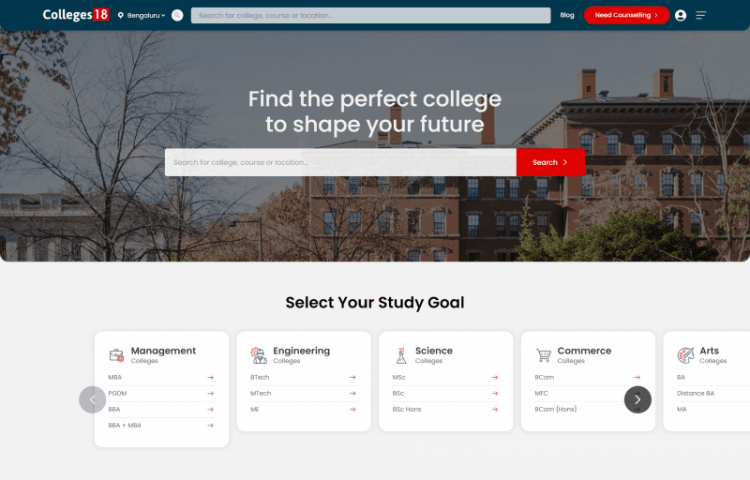
We build Node.js back ends that stay responsive under load — NestJS and Express APIs, real-time WebSocket services, queue workers and Strapi-powered platforms like Schools18 and Colleges18 — and we'll tell you honestly when Node.js is not the right runtime.


Building server-side software since 2009

REST and GraphQL APIs on NestJS or Express, with request validation, versioning, rate limiting and OpenAPI documentation your front-end and mobile teams can build against.

Chat, live dashboards, notifications, bidding and presence features over WebSockets, with a Redis-backed pub/sub layer so connections survive scaling to many instances.
Emails, PDFs, imports, scraping and third-party syncs moved off the request path into Redis-backed queues with retries, dead-letter handling and job dashboards.

Splitting a Node.js monolith only where it pays off — separate services for real-time, search or billing, talking over queues or events rather than chains of HTTP calls.

Strapi as the admin and content API, extended with custom Node.js controllers, services and data pipelines — the pattern behind Schools18 and Colleges18.

One Node.js service behind your Next.js site and React Native app: authentication, OTP sign-up, push notifications and shared TypeScript types across all three.

Event-loop lag, memory leaks, slow queries and blocking code found with profiling, not guesswork — then fixed with caching, pooling, worker threads or horizontal scaling.

Moving unsupported Node.js versions to current LTS, JavaScript codebases to TypeScript, callback-era Express apps to NestJS, and PHP back ends to Node.js where it makes sense.
Search-heavy education portals where a Node.js and Strapi back end serves thousands of records, filters and programmatic landing pages.
Engineers who understand what the event loop is doing — not just which npm package to install.
Seventeen years of shipping software for startups and enterprises, across every major shift in the web stack.

Independently certified information security — the baseline enterprise procurement checks.


Nine in ten clients come back for their next project — the most honest measure of delivery quality.


Verified client reviews collected independently by Clutch.

We design around non-blocking I/O from the start: CPU-heavy work goes to workers or a separate service, so one slow task never stalls every user.
Large, search-driven portals like Schools18 and Colleges18 run on our Node.js and Strapi back ends — we know where that stack bends and how to extend it.

 A practical guide to Node.js development
When Node.js is the right runtime, how we structure a production Node.js back end, and how to scale real-time and data-heavy workloads.
Node.js runs JavaScript on a single-threaded event loop with non-blocking I/O. While one request waits on the database or an external API, Node.js serves others. That makes it excellent at handling many concurrent, I/O-bound connections — and a poor place for long CPU-bound work, which blocks every request behind it.
We will say so if Node.js is the wrong tool:
Best for I/O-bound APIs, real-time and teams already using React or Next.js. Weakest at long CPU-bound tasks on the main thread.
Best for data processing, AI and ML integration and scripting. Django or FastAPI for APIs; async support is good but the ecosystem is less real-time focused.
Best for high-throughput network services and infrastructure tooling with tight memory budgets. Slower to build typical business CRUD and admin features.
Key takeaway: choose Node.js when most of the work is waiting on I/O and your product is already JavaScript on the front end; move CPU-heavy or data-science work into a dedicated service.
Most Node.js back ends that become hard to change started as a single Express file that kept growing. We start with a structure that separates HTTP handling, business logic and data access, so the codebase stays testable when the team and the feature list double.
Minimal and flexible; ideal for small services and integrations. Structure is up to the team, which becomes a risk as the codebase grows.
Opinionated, TypeScript-first and modular; more setup up front, but consistent patterns for auth, validation and testing across a large API.
Key takeaway: pick the framework for the size the codebase will reach in two years, not the size of the first sprint — and move slow work into queues from day one.
A Node.js process uses one CPU core for JavaScript by default. Scaling well means running several stateless instances, keeping shared state in Redis or the database, and watching event-loop lag — the metric that tells you when something is blocking.
What we learned building Schools18 (19,000+ schools) and Colleges18:
Key takeaway: Node.js scales horizontally when instances are stateless and the event loop never blocks — design for both before launch, then measure event-loop lag and query times in production.
We confirm Node.js suits the workload, then define services, data stores, queues and real-time channels before any code is written.
 Workload & runtime fitNestJS, Express or StrapiData model & API contractFixed quote & timeline
A TypeScript project skeleton with linting, tests, environment config, CI and containerised local development, so every engineer starts from the same base.
TypeScript & module layoutCI pipelineDocker environmentsSecrets managementTwo-week sprints delivering endpoints, background jobs and real-time events against the agreed contract, with API docs updated as we go.
Endpoints & validationQueues & scheduled jobsWebSocket eventsOpenAPI documentationUnit, integration and load tests, plus checks for dependency vulnerabilities, auth bypass and injection before anything reaches production.
Unit & integration testsLoad testingnpm dependency auditAuth & access reviewZero-downtime deploys with health checks and graceful shutdown, then monitoring of errors, event-loop lag and query times to guide scaling.
Rolling deploymentsError & latency alertsRunbooks & handoverOngoing supportBook a free call with a senior Node.js engineer — bring your architecture diagram, repository or product idea.

A school search and admissions portal for parents in India, with advanced multi-filter search, Google Maps, and parent registration with mobile OTP — powered by a Node.js and Strapi back end built for fast responses over a large dataset and programmatic SEO.
See case study Node.js + Strapi
  19,000+ Schools
  Mobile OTP
  Programmatic SEO
  Fixed-Scope Build
A defined API, real-time service or platform with agreed scope, milestones and price — ideal for new back ends and migrations.
Fixed scope & pricing Architecture document API documentation Code & infrastructure handover Dedicated Node.js Developers
Senior Node.js engineers who join your team, follow your conventions and work in your repositories and sprints.
Full-time engineers Your tools & cadence Scale up or down Named tech lead Audit & Time and Materials
Performance audits, upgrade work and evolving roadmaps billed on actual effort, with findings written up before fixes begin.
Profiling & code review Prioritised fix list Weekly reporting No long lock-inNot sure which fits? Tell us about your project and we'll recommend one.
Schedule a call
First-hand experiences from brands that scaled smarter, innovated faster, and achieved measurable growth with VOCSO.
View all client testimonials“Vocso team has really creative folks and is very co-operative to implement client project expectations. MicroSave Consulting had great experience working with Anju and Prem.”

“Working with Deepak and his team at Vocso is always a pleasure. They employ talented staff and deliver professional quality work every time.”

“We love how our website turned out! Thank you so much VOCSO Digital Agency for all your hard work and dedication.”

“VOCSO SEO & SEM services helped me find new customers in a small budget. Their advanced SEO strategies made us visible to everyone.”

“Vocso team has really creative folks and is very co-operative to implement client project expectations. MicroSave Consulting had great experience working with Anju and Prem.”
“Working with Deepak and his team at Vocso is always a pleasure. They employ talented staff and deliver professional quality work every time.”
“We love how our website turned out! Thank you so much VOCSO Digital Agency for all your hard work and dedication.”
“VOCSO SEO & SEM services helped me find new customers in a small budget. Their advanced SEO strategies made us visible to everyone.”
You delivered exactly what you said you would in exactly the budget and in exactly the timeline.





 Transparency on every decision Talented Team of AI Engineers Smooth Collaboration & Reporting Efficient & Adaptive Workflow Strict Privacy Assurance with NDA 12 Months Free Post-Launch Support On-time Delivery, No Surprises ISO 27001 Certified Engineering
Tell us what your service needs to do and how much traffic it should handle. We'll confirm whether Node.js is the right fit, recommend an architecture and give you a fixed quote for a defined scope.
deepak@vocso.com — straight to a senior team member.
It is a strong choice when most of the work is I/O — database queries, API calls, file uploads, real-time messages — and when your front end is already React or Next.js. If your back end is dominated by heavy computation or data science, we'll recommend Python or a separate service for that part.
For APIs that will grow beyond a handful of modules or be worked on by several developers, we recommend NestJS for its structure, dependency injection and consistent testing patterns. For small services, webhooks and integrations, Express keeps things lighter.
Not on the main event loop — a long calculation there delays every other request. We move that work into worker threads, a Redis-backed job queue or a dedicated service in Python, so the API stays responsive.
We run several stateless Node.js instances behind a load balancer and use a Redis adapter so events published on one instance reach clients connected to any other. Connection counts, message rates and event-loop lag are monitored so we add capacity before users notice.
Yes, but only where they solve a real problem — independent scaling, a separate team or a different release cadence. Most products start faster as a well-structured modular monolith and split out real-time, search or billing services later.
Yes. On Schools18 and Colleges18 we added custom routes, services and data pipelines to Strapi for multi-filter search, scraping, data processing and AI content generation. See our Strapi development services for more.
Yes. We start with a code and dependency audit, upgrade to a supported Node.js LTS version, add tests around critical paths and migrate JavaScript to TypeScript incrementally, without a big-bang rewrite.
Cost depends on the number of endpoints, integrations, real-time features and data volume. We give a fixed quote after discovery for defined scopes, or you can hire dedicated Node.js developers monthly. Our web application cost calculator gives a quick ballpark.
Discover complementary services that enhance performance, improve user experience, and help your business build scalable digital solutions efficiently.