
Since 2009
Seventeen years of shipping software for startups and enterprises, across every major shift in the web stack.


We build and modernise React applications — dashboards, portals, SaaS products and component libraries — and tell you plainly when plain React, Next.js or React Native is the better fit for what you are building.


Building for the web since 2009

Single-page applications built with Vite, React Router and TypeScript for logged-in products where search engines are not the audience — booking tools, internal systems and customer portals.

Data-dense screens with filtering, sortable and virtualised tables, charts and role-based views, built to stay responsive with thousands of rows on screen.

Multi-tenant interfaces with onboarding flows, permissions, billing screens and feature flags, structured so new modules can be added without touching the old ones.

A shared set of typed, documented React components in Storybook, so every product team builds from the same buttons, forms and tables instead of reinventing them.

When a client-rendered React app needs to rank or load faster on first visit, we move it to Next.js route by route, reusing your existing components.

Create React App to Vite, class components to hooks, React 18 to 19, or jQuery and AngularJS screens rewritten in React — one module at a time while the product stays live.

Profiling with the React DevTools Profiler, route-level code splitting, memoisation where it measurably helps, and trimming bundle weight that has crept in over the years.

iOS and Android apps that share types, API clients and business logic with your React web app, so one team can ship both.
Search-driven portals where React earns its place: heavy filtering, comparison and fast server-rendered pages.
Engineers who think about state, data flow and maintenance cost — not just how a screen looks on launch day.
Seventeen years of shipping software for startups and enterprises, across every major shift in the web stack.

Independently certified information security — the baseline enterprise procurement checks.


Nine in ten clients come back for their next project — the most honest measure of delivery quality.


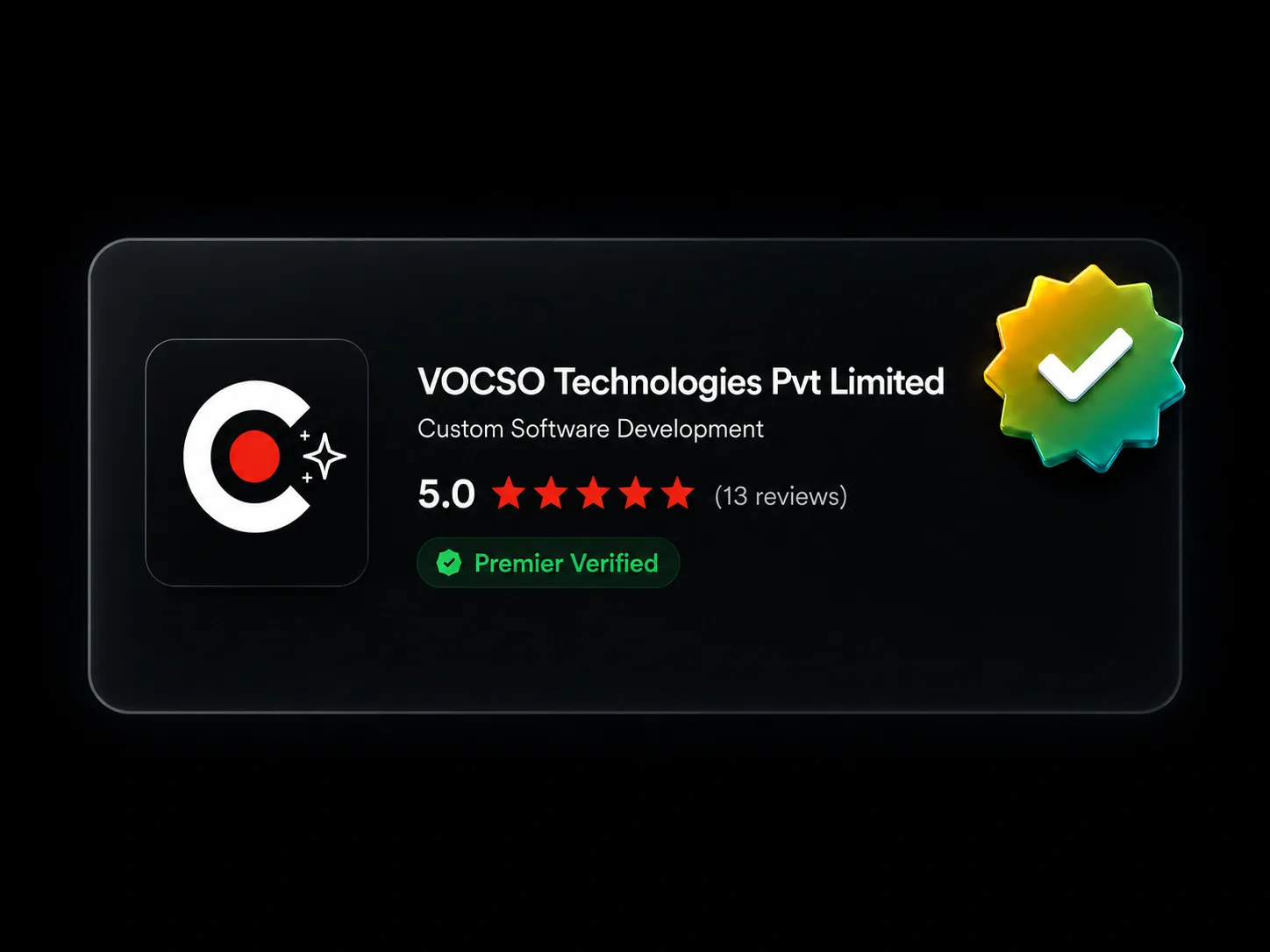
Verified client reviews collected independently by Clutch.
We will tell you if your project needs server rendering, a plain SPA or a mobile app — before any code is written, not after the first invoice.


Our Node.js and API engineers work alongside the React team, so data contracts, auth and caching are designed together.
 A practical guide to React development
How to choose between React, Next.js and React Native, the architecture decisions that matter most, and how to keep an ageing React codebase fast and current.
React is a UI library; how you ship it is a separate decision. The same components can run as a client-rendered SPA, inside Next.js with server rendering, or on phones through React Native. Picking the wrong shape is the most expensive React mistake we see.
We will recommend Next.js if any of these apply:
Client-rendered SPA. Cheapest to host and simplest mental model; best for authenticated apps.
Server and static rendering on top of React. Best for public, SEO-dependent sites and hybrid products.
Native iOS and Android apps from React code, sharing logic, types and API clients with the web app.
Key takeaway: decide who the main audience is — logged-in users, search engines or phone users — and let that pick between React, Next.js and React Native.
Most React codebases that become hard to change got there through state that lives in the wrong place and server data copied into global stores. We make these choices explicitly at the start and write them down.
Our usual pick for branded products: full design control, small CSS output and accessible behaviour from headless primitives.
Fastest route to a complete admin or internal tool with tables, date pickers and forms ready to use; heavier and harder to rebrand.
Theme-aware and accessible out of the box; a good fit for MVPs and mid-sized products with light branding.
Runtime CSS-in-JS with dynamic theming; we now avoid it for new builds because of its runtime cost and poor fit with server components.
Key takeaway: treat server data as a cache (TanStack Query), keep client state small and local, and pick a UI foundation that matches how much you need to look like your brand.
React apps rarely start slow; they get slow as features, dependencies and duplicated state pile up. The same is true of upgrades — skipped for two years, they turn into a rewrite. We build in the habits that prevent both.
For SPAs: a built bundle on a CDN with Git-based deploys and preview links. Low cost, little to maintain.
When the React app ships with its own API or needs strict environment control, deployed through GitHub Actions.
Key takeaway: budget a little time every sprint for profiling, tests and dependency upgrades — it is far cheaper than the rewrite that follows two years of neglect.
For new products we map users, screens and data; for existing React apps we audit the codebase first — dependencies, state, bundle size and test coverage.
 User flows & screen listExisting code auditReact vs Next.js decisionEstimate & timeline
Folder structure, state and data-fetching rules, API contracts and a component inventory agreed before build.
State & data strategyAPI contract with back endComponent inventoryUI foundation choiceTwo-week sprints with a preview link for every pull request, so you click through working screens rather than reading status reports.
TypeScript componentsStorybook documentationPreview deploymentsCode review on every changeComponent and end-to-end tests cover the journeys that matter; profiling and bundle checks catch slow screens before users do.
Vitest & Testing LibraryPlaywright E2EReact Profiler reviewAccessibility checksStaged releases with error tracking in place, then a documented handover or ongoing upgrades and feature work.
Sentry error trackingCI/CD pipelineArchitecture docsVersion upgradesBook a free call with a senior React engineer — bring your product idea or your existing repository.

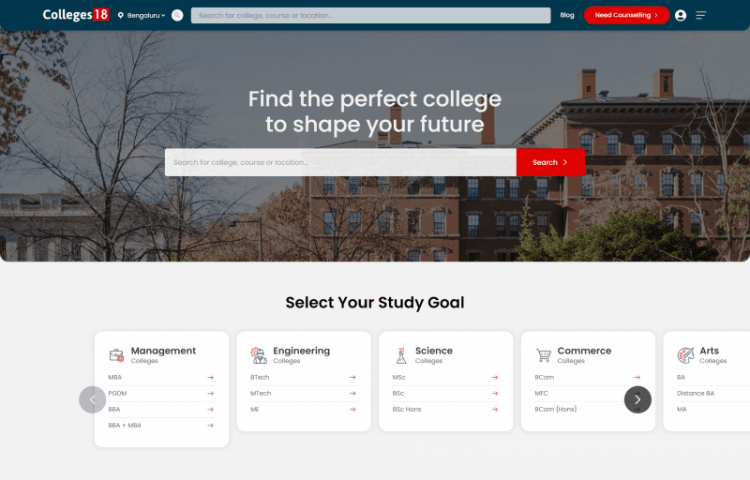
Dynamic search and filtering, college comparison, reviews and ratings, a wishlist and OTP sign-up — server-rendered with Next.js, managed in Strapi on a Node.js back end, with programmatic SEO driving organic growth.
See case study
 Next.js SSR
  Strapi CMS
  Programmatic SEO
  OpenAI + AWS S3
  Fixed-Scope Project
A defined React app, migration or component library with agreed scope, milestones and price.
Fixed scope & pricing Milestone-based delivery Dedicated project manager Documentation & handover Dedicated React Developers
Full-time React engineers joining your team, working in your repository, tools and sprint cadence.
Full-time engineers Your sprint cadence Scale up or down Monthly billing Time & Materials
Flexible capacity for audits, upgrades, performance work and evolving roadmaps, billed on actual effort.
Pay for hours used Change priorities anytime Weekly reporting No long lock-inNot sure which fits? Tell us about your project and we'll recommend one.
Schedule a call
First-hand experiences from brands that scaled smarter, innovated faster, and achieved measurable growth with VOCSO.
View all client testimonials“Vocso team has really creative folks and is very co-operative to implement client project expectations. MicroSave Consulting had great experience working with Anju and Prem.”

“Working with Deepak and his team at Vocso is always a pleasure. They employ talented staff and deliver professional quality work every time.”

“We love how our website turned out! Thank you so much VOCSO Digital Agency for all your hard work and dedication.”

“VOCSO SEO & SEM services helped me find new customers in a small budget. Their advanced SEO strategies made us visible to everyone.”

“Vocso team has really creative folks and is very co-operative to implement client project expectations. MicroSave Consulting had great experience working with Anju and Prem.”
“Working with Deepak and his team at Vocso is always a pleasure. They employ talented staff and deliver professional quality work every time.”
“We love how our website turned out! Thank you so much VOCSO Digital Agency for all your hard work and dedication.”
“VOCSO SEO & SEM services helped me find new customers in a small budget. Their advanced SEO strategies made us visible to everyone.”
You delivered exactly what you said you would in exactly the budget and in exactly the timeline.





 Transparency on every decision Talented Team of AI Engineers Smooth Collaboration & Reporting Efficient & Adaptive Workflow Strict Privacy Assurance with NDA 12 Months Free Post-Launch Support On-time Delivery, No Surprises ISO 27001 Certified Engineering
Tell us what you are building, or share access to the codebase you already have. We'll recommend React, Next.js or React Native honestly, and give you a realistic plan and quote.
deepak@vocso.com — straight to a senior team member.
Architecture, UI build, state and data-fetching setup, API integration, testing, deployment and ongoing maintenance. We also take on focused work such as performance audits, React version upgrades, component libraries and migrations from older front ends.
Use plain React (built with Vite) for apps that live behind a login, such as dashboards and internal tools, where SEO does not matter and static hosting keeps costs low. Choose Next.js when public pages need to rank, load fast on first visit or pull content from a CMS.
A client-rendered React app sends search engines a mostly empty page and relies on JavaScript to fill it, which is slower and less reliable to index. For SEO-dependent pages we render React on the server with Next.js; for logged-in apps SEO is not a concern.
Cost depends on the number of screens, the complexity of state and integrations, and whether design is included. We quote fixed prices for defined projects after a discovery call, or you can hire dedicated React developers monthly. The web application cost calculator gives a quick ballpark.
Timelines depend on scope, integrations and how quickly decisions are made, so we don't quote a number up front. After a short discovery phase we give you a dated release plan, delivered in two-week sprints; for a quick early estimate, try our web application cost calculator.
We start with local state and TanStack Query for server data, which covers most apps. We add Zustand for shared client state, and Redux Toolkit for large applications with complex workflows and many contributors.
Yes. We begin with a code audit, then stabilise and upgrade — for example Create React App to Vite, class components to hooks, or React 18 to 19. If the app needs server rendering, we migrate it to Next.js route by route with redirects in place.
Yes, through React Native. UI components are rebuilt for native screens, but TypeScript types, validation rules, API clients and much of the business logic can live in a shared package used by both apps.
React escapes rendered output by default, so we focus on the gaps: no unsanitised HTML injection, tokens in HTTP-only cookies rather than localStorage, a Content Security Policy, and permissions enforced on the API rather than only hidden in the UI.
Discover complementary services that enhance performance, improve user experience, and help your business build scalable digital solutions efficiently.